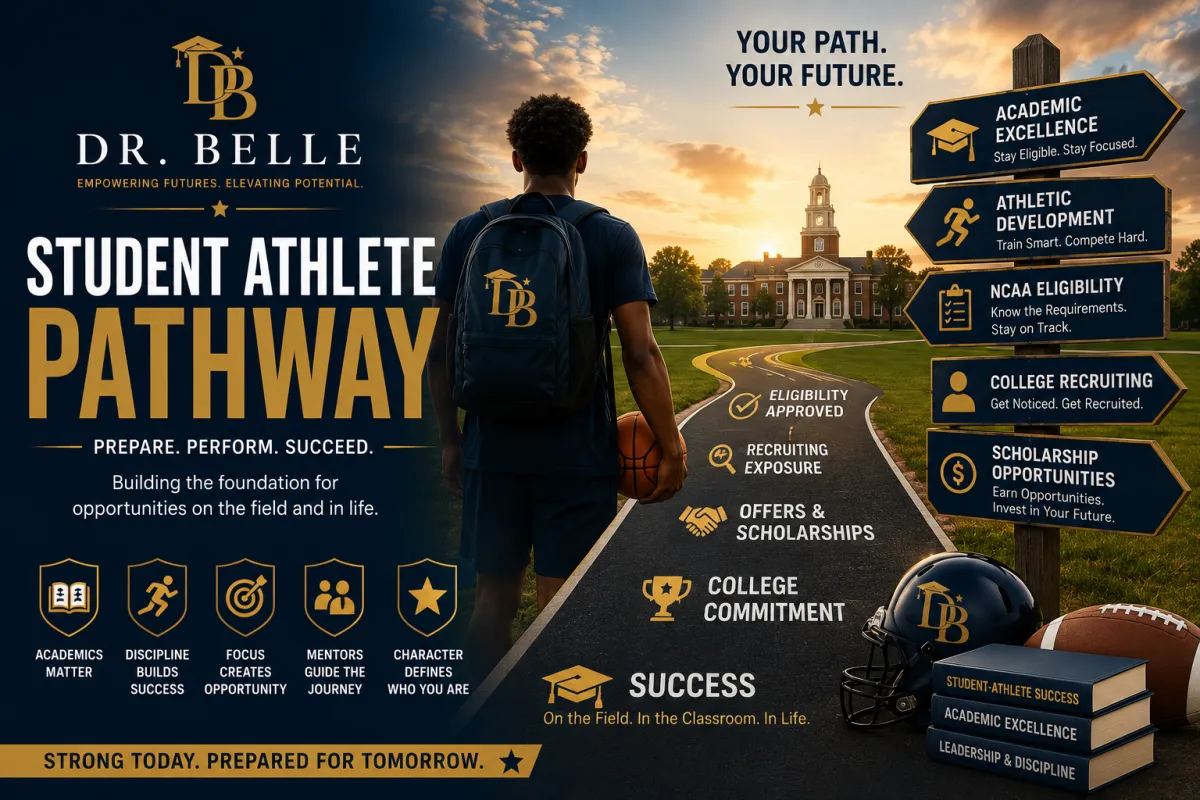
What NCAA Eligibility Really Means
What NCAA Eligibility Really Means
Many student-athletes dream of competing at the college level.
They spend countless hours training, practicing, and competing in hopes of earning an opportunity to continue their athletic career after high school.
However, talent alone is not enough.
Before a student-athlete can compete in NCAA athletics, they must meet specific eligibility requirements established by the NCAA. Unfortunately, many families do not fully understand these requirements until it is almost too late.
NCAA eligibility is the process used to determine whether a student-athlete meets the academic standards necessary to participate in college athletics.
The NCAA wants student-athletes to be prepared for success both on the field and in the classroom. As a result, academic performance plays a significant role in the eligibility process.
Eligibility requirements generally include completing approved core courses, maintaining the required grade point average, graduating from high school, and meeting NCAA academic standards.
One common misconception is that athletic ability can compensate for academic deficiencies.
In reality, even highly talented athletes can lose opportunities if they fail to meet eligibility requirements.
Another mistake families make is waiting until junior or senior year to learn about NCAA standards.
Course selection during freshman and sophomore years can impact a student's eligibility status later. Students who are not taking the appropriate core courses may find themselves scrambling to meet requirements as graduation approaches.
Student-athletes should also understand the importance of maintaining strong academic habits throughout high school.
Every semester matters.
Strong grades not only support NCAA eligibility but can also increase scholarship opportunities and strengthen college admissions applications.
Parents play an important role in the process as well.
Families should regularly review academic progress, communicate with school counselors, and stay informed about NCAA requirements. Being proactive can help prevent unnecessary surprises later in a student's high school career.
For student-athletes who hope to compete at the collegiate level, NCAA eligibility should not be viewed as a senior-year checklist.
It should be part of a long-term plan that begins early and remains a priority throughout high school.
Athletic talent may open the door, but academic preparation helps keep that door open.
Understanding NCAA eligibility requirements today can help create more opportunities tomorrow and position student-athletes for success both in college athletics and beyond.